PRP Treatment in Zirakpur: A Natural Approach to Hair Growth and Hair Loss Control

Hair thinning often begins quietly. You may notice more strands on your pillow, a widening hair part, reduced density, or increased hair fall while washing. Although losing some hair every day is normal, persistent or progressive thinning deserves proper evaluation. Depending on the cause and stage of hair loss, treatments such as Platelet-Rich Plasma (PRP) therapy may form part of a personalized hair restoration plan.
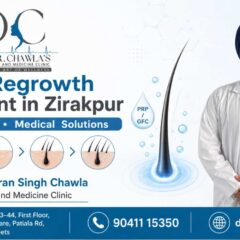
PRP Treatment in Zirakpur is a non-surgical procedure that uses a concentrated component prepared from the patient’s own blood. Doctors use it in selected cases to support existing hair follicles and improve the overall hair restoration approach.
At Chawla Skin and Medicine Clinic, Dr. Harsimran Singh Chawla evaluates the scalp, pattern of hair loss, medical history, and other relevant factors before suggesting an appropriate treatment plan.
What Is PRP Treatment in Zirakpur?
PRP stands for Platelet-Rich Plasma. Platelets are components of blood that contain various growth factors involved in tissue repair and healing processes.
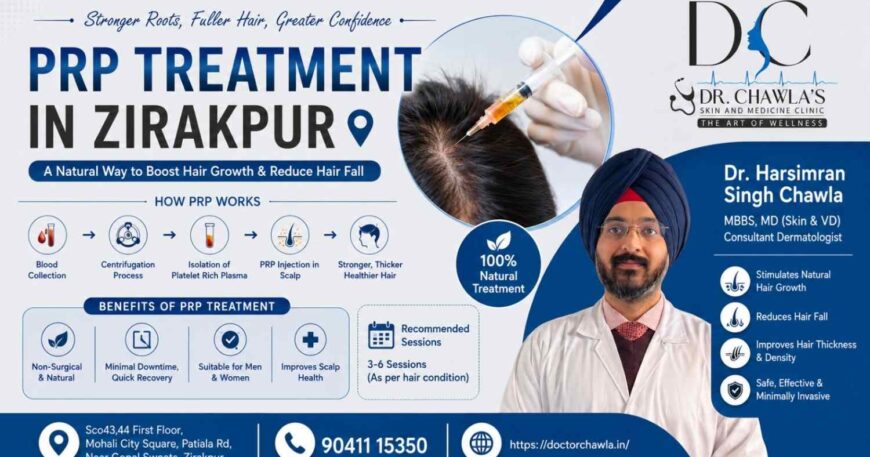
During PRP therapy, the clinician draws a small quantity of the patient’s blood and processes it in a centrifuge. This process separates and concentrates the platelet-rich portion. The clinician then administers the prepared PRP into selected areas of the scalp.
The procedure generally involves these steps:
- Blood collection: A small amount of blood is drawn from the patient.
- Centrifugation: The blood goes into a centrifuge to separate its components.
- PRP preparation: The clinician prepares the platelet-rich portion for treatment.
- Scalp administration: The clinician delivers PRP into targeted areas of hair thinning.
- Post-treatment guidance: Patients receive instructions for scalp care following the session.
Since PRP comes from the patient’s own blood, the treatment does not involve donor tissue.
How Can PRP Help With Hair Loss?
Hair grows in cycles, and different medical, hormonal, nutritional, genetic, and lifestyle factors can disrupt these cycles. Therefore, identifying the reason behind hair loss remains an important first step.
In appropriately selected patients, PRP may help support the environment around existing hair follicles. Clinicians commonly consider it as part of a broader treatment strategy for certain forms of hair thinning, particularly pattern hair loss.
Depending on the individual case, the goals may include:
- Supporting existing hair follicles
- Improving the appearance of hair density
- Complementing other hair-loss treatments
- Supporting scalp and follicular health
- Managing early or progressive thinning
However, PRP cannot create new follicles where follicles no longer exist. Results also differ between patients. Therefore, a consultation helps determine whether PRP suits the type and stage of hair loss.
Who May Consider PRP Treatment?
Not every person experiencing hair fall needs PRP. A dermatologist should first evaluate the underlying cause.
A clinician may consider PRP Treatment in Zirakpur for selected people experiencing:
- Early-stage pattern hair thinning
- Reduced hair density
- Progressive thinning in areas where follicles remain active
- Certain cases of androgenetic alopecia
- Hair loss that requires a combined treatment approach
On the other hand, sudden or severe hair shedding may require investigation for nutritional deficiencies, thyroid disorders, illness, medications, stress, hormonal changes, or other medical causes before starting a hair restoration procedure.
Why Diagnosis Comes Before PRP
Seeing hair fall does not reveal its cause. Two people may experience similar thinning but require completely different treatment plans.
For this reason, a proper hair and scalp assessment may include:
- Pattern and duration of hair loss
- Family history
- Recent illnesses or major stress
- Diet and nutritional factors
- Current medications
- Scalp condition
- Hair shaft quality
- Existing follicular density
- Previous hair-loss treatments
After the assessment, the clinician can decide whether PRP alone, medical treatment, lifestyle changes, or a combination approach makes more sense.
How Many PRP Sessions Are Required?
PRP does not follow a universal schedule. The number and frequency of sessions depend on the degree of hair thinning, individual response, treatment goals, and the clinician’s assessment.
Some patients may require an initial series of sessions followed by periodic maintenance. However, your dermatologist should determine the schedule instead of following a fixed plan advertised online.
Moreover, hair growth takes time. Patients should not expect a dramatic change immediately after one session. Consistency and follow-up play an important role in evaluating progress.
PRP vs Hair Transplant: What Is the Difference?
Patients sometimes assume that PRP and hair transplantation provide the same solution. However, they work very differently.
PRP therapy is a non-surgical procedure that aims to support existing follicles in appropriately selected patients. It does not move or create hair follicles.
In contrast, a hair transplant involves taking suitable follicles from a donor area and implanting them into areas affected by permanent hair loss.
Therefore:
- PRP may suit certain patients with existing but thinning hair.
- Hair transplantation may suit selected patients with established permanent hair loss and an adequate donor area.
- Some treatment plans may include different approaches at different stages.
A clinical assessment helps determine which option matches the patient’s condition.
What to Expect After a PRP Session
PRP usually requires minimal interruption to everyday activities, although individual experiences vary. Some people may notice temporary scalp tenderness, redness, sensitivity, or mild swelling around treated areas.
After treatment, follow the instructions provided by your clinician. These may include guidance regarding:
- Hair washing
- Scalp products
- Exercise
- Sun or heat exposure
- Hair colouring or chemical treatments
- Prescribed or recommended hair-loss treatments
Following appropriate aftercare can help keep the scalp comfortable and support the treatment plan.
Choosing the Right Clinic for PRP Treatment in Zirakpur
A successful hair-loss management plan depends on much more than simply undergoing PRP injections. Therefore, choose a clinic that focuses on diagnosis and personalized care.
Before starting treatment, consider whether the clinic provides:
- Detailed hair and scalp evaluation
- Clear explanation of the procedure
- Individualized treatment planning
- Appropriate hygiene protocols
- Transparent discussion about limitations
- Realistic expectations about results
- Follow-up and progress assessment
- Additional hair-loss options when necessary
Most importantly, avoid clinics that promise guaranteed hair regrowth or identical outcomes for every patient.
PRP Treatment at Chawla Skin and Medicine Clinic
At Chawla Skin and Medicine Clinic, Dr. Harsimran Singh Chawla provides evaluation and treatment planning for different hair and scalp concerns. Rather than selecting PRP simply because a patient experiences hair fall, the approach starts with understanding the pattern and possible cause of hair loss.
Depending on the assessment, Dr. Harsimran Singh Chawla may discuss PRP or other suitable hair-loss management options. This personalized approach helps patients understand what the treatment can realistically achieve and whether it fits their individual condition.
Supporting Your Hair Beyond PRP
PRP should not replace good overall hair and scalp care. In addition to professional treatment, patients should pay attention to factors that may influence hair health.
Helpful measures include:
- Eating a balanced, protein-rich diet
- Correcting confirmed nutritional deficiencies
- Avoiding excessive heat and harsh chemical treatments
- Managing stress and maintaining adequate sleep
- Treating dandruff or other scalp conditions appropriately
- Following prescribed hair-loss treatment consistently
- Avoiding unnecessary supplements without professional guidance
Together, these measures can support a more comprehensive approach to hair-loss management.
Conclusion
Hair loss has many possible causes, which means no single treatment works for everyone. PRP Treatment in Zirakpur may provide a non-surgical option for selected patients with hair thinning, particularly when active follicles remain in the affected areas. However, accurate diagnosis and realistic expectations remain essential.
At Chawla Skin and Medicine Clinic, Dr. Harsimran Singh Chawla evaluates each patient’s hair and scalp condition before recommending an appropriate treatment strategy. If persistent hair fall, reduced density, or progressive thinning concerns you, a professional consultation can help you understand the cause and explore suitable hair restoration options.
Frequently Asked Questions
1. Is PRP treatment suitable for everyone with hair loss?
No. The effectiveness and suitability of PRP depend on the cause, severity, and pattern of hair loss. A proper scalp and hair assessment helps determine whether PRP may benefit an individual patient.
2. When can I expect results from PRP treatment?
Hair growth occurs gradually, so results do not appear immediately. The response and timeline vary between individuals, and patients may require multiple sessions before they can properly assess changes.
3. Can PRP completely cure baldness?
PRP does not create new hair follicles and cannot guarantee complete restoration of bald areas. It primarily aims to support existing follicles in suitable patients. People with advanced permanent hair loss may need to discuss other restoration options with their clinician.