How to Treat Alopecia Areata: Expert Guide

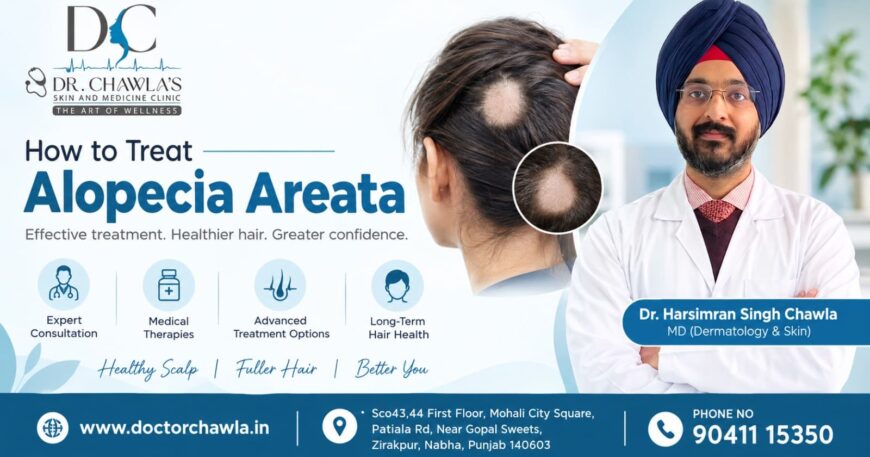
How to Treat Alopecia Areata? Alopecia areata is treated with corticosteroid injections, topical immunotherapy, minoxidil, and advanced options like JAK inhibitors, depending on severity. There’s no permanent alopecia areata cure, but early diagnosis and a personalized treatment plan from a dermatologist significantly improve regrowth outcomes. Dr. Chawla, a leading dermatologist in Zirakpur, offers customized treatment based on the extent of hair loss.
Sudden, coin-shaped bald patches can be alarming, especially when there’s no obvious cause. Alopecia areata is an autoimmune condition that affects millions of people worldwide, and while it isn’t life-threatening, its impact on confidence and self-image is very real.
The good news is that alopecia areata is manageable. With the right combination of treatments and early intervention, many patients see significant hair regrowth. This guide breaks down what alopecia areata is, why it happens, and the most effective treatment for alopecia areata available today, including options offered by specialists like Dr. Chawla, recognized as one of the best dermatologists in Zirakpur.
What Is Alopecia Areata?
Alopecia areata is an autoimmune disorder in which the immune system mistakenly attacks hair follicles, leading to hair loss. Unlike pattern baldness, which develops gradually, alopecia areata often causes sudden, patchy hair loss on the scalp, eyebrows, eyelashes, or other parts of the body.
The condition can affect anyone, regardless of age or gender, though it often first appears in childhood or early adulthood. Severity varies widely: some people experience a single small patch that regrows on its own, while others develop more extensive hair loss, including alopecia totalis (total scalp hair loss) or alopecia universalis (total body hair loss).
Common Signs of Alopecia Areata
Recognizing the early symptoms of alopecia areata can help you seek treatment sooner. Common signs include:
- Round or oval bald patches on the scalp, beard, or eyebrows
- Sudden hair loss that happens over a few days or weeks
- Exclamation mark hairs — short, tapered strands near the edges of bald patches
- Nail changes, such as pitting, ridging, or brittleness
- Itching or tingling in the affected area before hair loss occurs
If you notice any of these symptoms, consulting a skin specialist promptly can help confirm the diagnosis and rule out other causes of hair loss.
What Causes Alopecia Areata?
Alopecia areata occurs when the immune system attacks hair follicles, but what triggers this immune response isn’t fully understood. Several factors are believed to contribute:
- Genetics: A family history of alopecia areata or other autoimmune conditions increases risk.
- Autoimmune conditions: People with thyroid disease, vitiligo, or type 1 diabetes have a higher likelihood of developing alopecia areata.
- Stress: While not a direct cause, significant physical or emotional stress can trigger onset in genetically predisposed individuals.
- Environmental triggers: Infections or other external factors may play a role in some cases.
Because the exact cause varies from person to person, an accurate diagnosis from a dermatologist is essential before starting treatment.
Alopecia Areata Treatment in Zirakpur
There’s no single alopecia areata cure that works for everyone, but multiple treatment options can encourage regrowth and manage symptoms effectively. Dr. Chawla, a trusted dermatologist in Zirakpur, tailors treatment plans based on the pattern and severity of hair loss.
1. Corticosteroid Treatment
Corticosteroids are one of the most common approaches for treating alopecia areata. They work by suppressing the localized immune response attacking the hair follicles.
- Corticosteroid injections: Administered directly into bald patches, typically every four to six weeks. This is often the first-line treatment for patchy alopecia areata.
- Oral corticosteroids: Used for more extensive hair loss, though typically for shorter durations due to potential side effects.
2. Topical Treatments
Topical treatments are frequently used alongside other therapies or as a standalone option for mild cases.
- Minoxidil: Applied directly to the scalp to stimulate hair regrowth and improve density.
- Topical corticosteroids: Creams or ointments applied to affected areas, often used for children or those who prefer a non-injection approach.
- Anthralin: A topical agent that alters immune function in the skin, sometimes used in combination with other treatments.
3. Advanced Medical Treatments
For patients who don’t respond to first-line treatments, or those with extensive hair loss, advanced options are available.
- JAK inhibitors: A newer class of medication that targets the specific immune pathways involved in alopecia areata. These have shown promising results for moderate to severe cases.
- Topical immunotherapy: Substances like diphencyprone (DPCP) are applied to the scalp to trigger a mild allergic reaction, which can stimulate hair regrowth in some patients.
- Platelet-rich plasma (PRP) therapy: Uses the patient’s own blood platelets to stimulate hair follicles, often used as a complementary treatment.
4. Treatment for Eyebrow and Eyelash Hair Loss
Alopecia areata doesn’t always stay confined to the scalp. When eyebrows or eyelashes are affected, targeted treatments include:
- Bimatoprost solution, applied to eyelashes to promote growth
- Micro-injections of corticosteroids in eyebrow areas
- Camouflage techniques, such as microblading, for cosmetic support during regrowth
5. Combination Treatment
Many dermatologists, including Dr. Chawla, recommend combining therapies for better results. For example, corticosteroid injections paired with topical minoxidil often produce faster, more noticeable regrowth than either treatment alone. The best treatment for alopecia areata is rarely a single approach — it’s a personalized plan built around the patient’s specific pattern of hair loss and response to therapy.
Why Early Diagnosis of Alopecia Areata Matters
Early diagnosis directly impacts treatment success. When alopecia areata is caught in its early stages, hair follicles are less likely to sustain long-term damage, which means regrowth treatments tend to work faster and more effectively.
Delaying treatment can allow the condition to progress from small patches to more extensive hair loss, which is harder to reverse. Consulting a qualified skin specialist in Zirakpur, at the first sign of unusual hair loss gives you access to a wider range of treatment options and a better chance of full regrowth.
Take the Next Step Toward Regrowth
Alopecia areata can feel discouraging, but effective treatments are available, and early action makes a meaningful difference. Whether you’re dealing with a single small patch or more widespread hair loss, a personalized treatment plan can help restore both your hair and your confidence.
If you’re searching for the best dermatologist in Zirakpur to evaluate your symptoms, Dr. Chawla offers expert diagnosis and treatment for alopecia areata, tailored to your specific condition. Book a consultation today to start your path toward healthier hair.
FAQs
Is there a permanent cure for alopecia areata?
There is currently no guaranteed permanent alopecia areata cure, as it’s a chronic autoimmune condition that can recur. However, many patients achieve significant or full regrowth with proper treatment, and ongoing management can help control flare-ups.
How long does alopecia areata treatment take to show results?
Most treatments, such as corticosteroid injections, take three to six months to show visible regrowth. Advanced treatments like JAK inhibitors may show results within a similar timeframe, though individual response varies.
What is the best treatment for alopecia areata?
The best treatment for alopecia areata depends on the extent of hair loss. Corticosteroid injections work well for small patches, while advanced options like JAK inhibitors or topical immunotherapy are often recommended for more extensive cases.
Can alopecia areata come back after treatment?
Yes, alopecia areata can recur even after successful regrowth, since the underlying autoimmune tendency remains. Regular follow-up with a dermatologist helps catch and manage any recurrence early.
When should I see a dermatologist for hair loss?
You should consult a dermatologist as soon as you notice sudden, patchy, or unexplained hair loss. Early evaluation by a skin specialist increases the chances of effective treatment and full regrowth.