
Oily Scalp Treatment in Zirakpur: Causes, Symptoms, and Expert Solutions

Dealing with hair that looks greasy, flat, and limp just hours after washing can be deeply frustrating. While natural scalp oil—known as sebum—plays an essential role in protecting hair strands and keeping the skin barrier hydrated, excessive sebum production creates an uncomfortable cycle of buildup, itchiness, and dandruff. When over-the-counter shampoos fail to deliver lasting relief, seeking professional Oily Scalp Treatment in Zirakpur helps restore scalp balance and long-term hair health.
Understanding why your scalp overproduces oil is the first step toward effective management. Below is a comprehensive guide covering the root causes, warning signs, dermatologist-recommended treatments, and preventive habits for a clean, healthy scalp.
What Causes an Oily Scalp?
Your scalp contains thousands of sebaceous glands attached to hair follicles. Several internal and environmental triggers can overstimulate these glands. Understanding what Causes an Oily Scalp allows you to address the issue at its source rather than merely masking surface grease.
1. Hormonal Changes
Fluctuations in androgen hormones directly stimulate sebaceous glands to produce more sebum. Puberty, menstrual cycles, pregnancy, polycystic ovary syndrome (PCOS), and thyroid imbalances frequently trigger sudden spikes in scalp oiliness alongside facial acne.
2. Genetics
Just like skin type, your baseline sebum production is largely inherited. If your parents have oily skin or greasy hair, your sebaceous glands may naturally be larger and more active, requiring a tailored care routine.
3. Excessive Hair Product Usage
Layering heavy hair oils, leave-in conditioners, silicones, styling waxes, and dry shampoos clogs hair follicles. When residue accumulates on the scalp, it traps natural oils and triggers reactive sebum overproduction.
4. Humidity and Weather Conditions
Warm, humid weather—common across North India for much of the year—increases sweat and stimulates sebaceous gland activity. Sweat mixes with sebum and airborne pollutants, spreading oil rapidly along the hair shaft and weighing roots down.
5. Stress
Chronic physical or emotional stress elevates cortisol levels. High cortisol disrupts hormonal equilibrium and signals sebaceous glands to ramp up oil secretion, often worsening scalp sensitivity and flaking.
6. Seborrheic Dermatitis
Seborrheic dermatitis is a common inflammatory scalp condition linked to an overgrowth of Malassezia yeast, which thrives on scalp lipids. It causes greasy, yellowish flakes, redness, and persistent oiliness that standard cosmetic shampoos cannot resolve.
What Are the Common Symptoms of an Oily Scalp?
An overly oily scalp rarely goes unnoticed. Common signs include:
-
Hair roots that appear shiny, clumped, or weighed down within 12 to 24 hours of washing.
-
Persistent scalp itching, tenderness, or a heavy, congested sensation.
-
Greasy, sticky dandruff flakes that cling to the scalp rather than falling loosely onto shoulders.
-
Noticeable scalp odor caused by sebum mixing with sweat and microflora.
-
Small, painful bumps or folliculitis (scalp acne) along the hairline and crown.
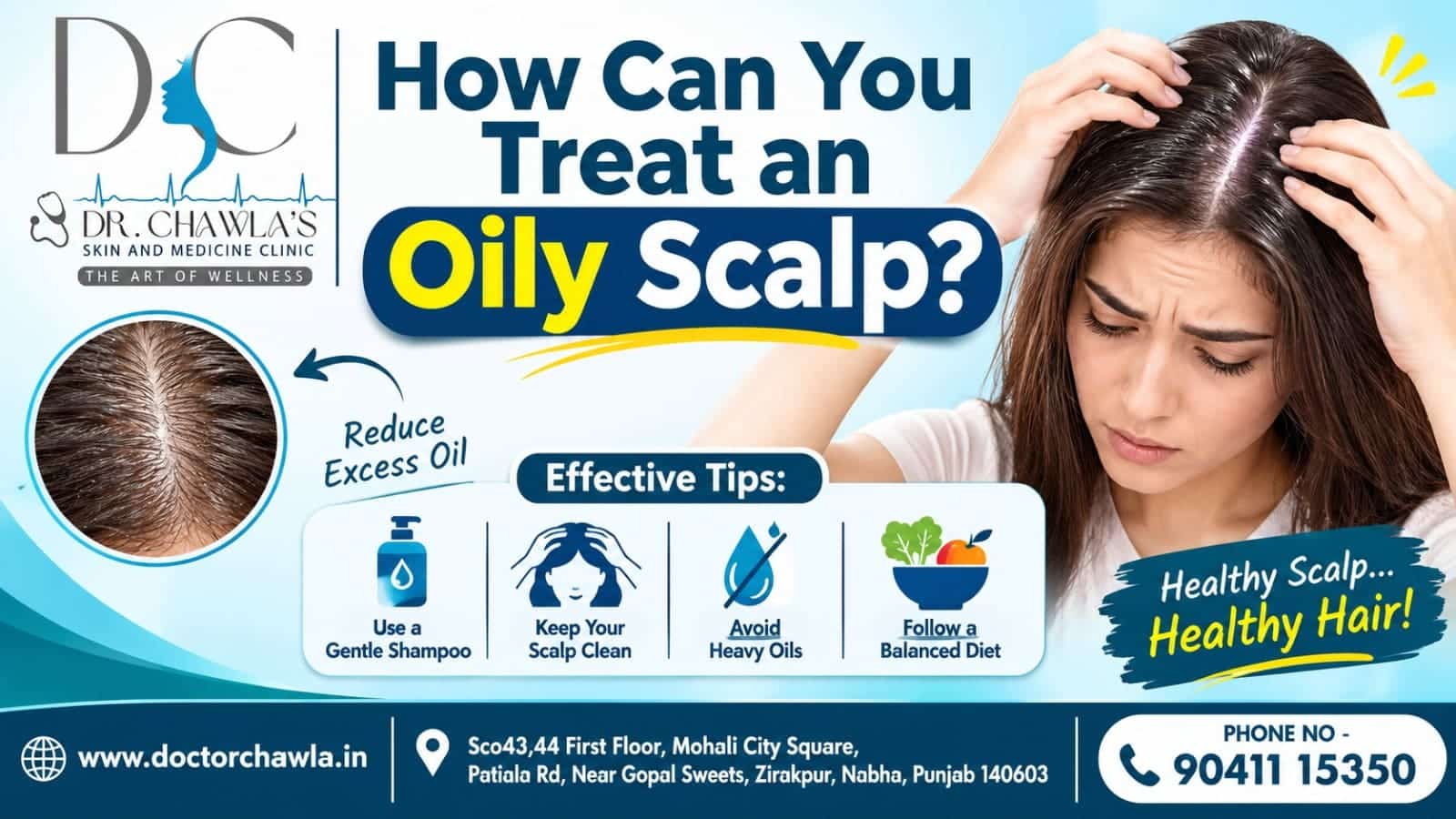
How Can You Treat an Oily Scalp?
Effective management combines targeted cleansing with medical-grade scalp care. Consulting the Best skin specialist in Zirakpur ensures your treatment plan addresses your exact scalp type and underlying triggers.
1. Medicated Shampoos
Dermatologists often prescribe targeted shampoos containing active ingredients such as salicylic acid (to exfoliate dead skin and unclog pores), ketoconazole or zinc pyrithione (to control Malassezia yeast), or selenium sulfide (to regulate cell turnover and excess sebum).
2. Regular Scalp Cleansing
Washing your hair at an appropriate frequency—typically every alternate day or daily if you sweat heavily—removes accumulated oil, sweat, and pollution before they irritate follicles. Focus shampoo massage gently on the scalp using your fingertips rather than scratching with fingernails.
3. Appropriate Scalp Treatments
In-clinic Oily Scalp Treatment in Zirakpur options—such as medical scalp peels, deep follicular detox therapies, and high-frequency or LED scalp balancing sessions—deeply cleanse congested pores, regulate sebum output, and calm inflammation far more effectively than home remedies alone.
4. Avoid Heavy Hair Products
Switch to lightweight, non-comedogenic, sulfate-balanced hair care products. Apply conditioners and hair serums strictly from the mid-lengths to the ends, keeping them completely off the scalp.
5. Treat Underlying Scalp Conditions
If your oiliness stems from seborrheic dermatitis, scalp psoriasis, or hormonal imbalances, treating the root medical condition with prescription lotions or systemic care provides lasting relief.
How Can You Prevent Excessive Oil Production on the Scalp?
Consistent daily habits help keep sebum levels balanced between clinic visits:
-
Rinse with Lukewarm Water: Hot water strips natural lipids and shocks sebaceous glands into producing even more oil to compensate.
-
Clean Brushes and Pillowcases Weekly: Hairbrushes and pillow covers accumulate old sebum, dead skin, and product buildup that transfer straight back onto clean hair.
-
Avoid Over-Touching Your Hair: Frequent brushing or running fingers through your hair spreads oil from the roots down the strands.
-
Maintain a Balanced Diet: Reduce high-glycemic foods, refined sugars, and excessive dairy, which can spike insulin and androgen activity, while increasing hydration, zinc, and omega-3 intake.
-
Skip Heavy Overnight Oiling: Applying thick oils to an already greasy scalp worsens follicular blockage and fungal growth.
Can an Oily Scalp Cause Hair Loss?
While natural sebum itself does not directly destroy hair follicles, chronic untreated scalp oiliness creates an environment that contributes to hair shedding. Excess sebum traps dirt, dead skin cells, and styling residue, clogging follicles and triggering low-grade inflammation (folliculitis) or seborrheic dermatitis. Over time, inflamed, congested follicles weaken hair anchorage, leading to increased hair fall and thinning. Proper Oily Scalp Treatment in Zirakpur clears follicular blockages and protects healthy hair growth.
When Should You Visit a Dermatologist for an Oily Scalp?
You should schedule an evaluation at the Best Skin Care Clinic Zirakpur if:
-
Your scalp remains greasy and itchy despite switching to gentle, clarifying shampoos.
-
You notice thick yellowish scales, redness, oozing, or painful scalp bumps.
-
Excess oiliness is accompanied by sudden hair thinning or increased shedding.
-
Symptoms flare repeatedly and affect your daily comfort or confidence.
An experienced dermatologist performs a thorough trichoscopy (scalp magnification analysis) to distinguish between simple seborrhea, fungal dandruff, or hormonal triggers, designing a personalized medical protocol for lasting results.
FAQs
1. How often should I wash an oily scalp?
Most people with an oily scalp benefit from washing every alternate day—or daily if exposed to heavy humidity, workouts, or pollution—using a gentle, dermatologist-recommended cleanser.
2. Does oiling an oily scalp help reduce grease?
No. Applying heavy coconut, castor, or mustard oil onto an already oily scalp clogs follicles, feeds dandruff-causing yeast, and worsens inflammation.
3. Are salon hair spas good for an oily scalp?
Standard salon spas often rely on heavy creams and silicones that weigh down greasy roots. Instead, opt for medical scalp detox therapies supervised by the Best skin specialist in Zirakpur.
4. How long does professional oily scalp treatment take to show results?
With targeted medicated shampoos and clinical scalp therapies, most patients notice significant improvement in scalp freshness, reduced itching, and cleaner roots within 2 to 4 weeks.
Conclusion
Living with constant grease, flat roots, and scalp irritation does not have to be your daily reality. By recognizing what Causes an Oily Scalp and adopting a targeted combination of gentle cleansing, smart lifestyle habits, and clinical care, you can achieve a refreshed, balanced scalp and healthier hair.
If persistent oiliness, flaking, or hair fall is holding you back, consult the Best skin specialist in Zirakpur at the Best Skin Care Clinic Zirakpur for personalized Oily Scalp Treatment in Zirakpur tailored to your scalp’s exact needs.